


















High-Precision Data Annotation Services for Production AI & Computer Vision
Computer vision models in production require pixel-accurate ground truth, especially on edge cases and complex sensor feeds. Obraz’s computer vision data annotation services cover polygon segmentation and 3D LiDAR point clouds to video multi-object tracking and sensor fusion, our in-house specialists deliver verified datasets with zero outsourced crowdsourcing.
Our annotation workflows are designed for enterprise AI projects where data quality, security, consistency, and controlled handling are critical. With an in-house specialist workforce and proprietary annotation infrastructure, we deliver verified training datasets that can move directly into model development, validation, and production workflows.
Discover our Custom Computer Vision Solutions to see how we engineer, train, and deploy models from these datasets directly to edge devices and cloud infrastructure.


NO-Third party, secure data annotation:
From Raw Data to Production-Ready Models
Over 80% of computer vision models fail in production not because of model architecture, but due to inconsistent, noisy ground-truth training data. Our in-house data annotation services eliminate data pipeline fragmentation at the root.
100% In-House Dedicated Workforce
Every bounding box, polygon contour, and point cloud is labeled by trained, background-verified specialists under strict NDAs. We never crowdsource to anonymous gig workers, guaranteeing consistent labeling taxonomy and absolute data integrity.
Sub-Pixel Engineering Precision
Production computer vision demands extreme accuracy on difficult edge cases, occlusion, low-contrast imagery, and micro-defects. Our specialists follow rigorous standard operating procedures calibrated for complex real-world environments.
Enterprise Security & Data Custody
Work occurs on managed, internet-restricted workstations where external downloads, USB drives, screenshots, and clipboard copying are blocked. We maintain complete cryptographic audit logs and provide certified data destruction—the level of control enterprise data annotation services demand for sensitive, regulated projects.

Core Annotation Modalities &
Sensor Streams Expertise
Supporting diverse visual data types and sensor streams through our Computer Vision Data Annotation Services, backed by tailored tooling and sub-pixel accuracy.


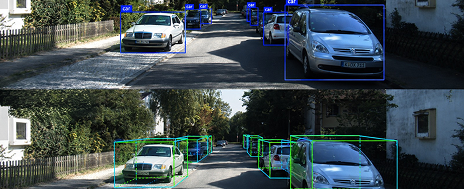
2D & 3D Bounding Boxes (Cuboids)
High-throughput 2D bounding boxes and 3D spatial cuboids capturing object position, orientation, depth, and spatial dimensions. Essential for autonomous vehicles, inventory tracking, traffic monitoring, and retail analytics.

Polygon & Semantic Segmentation
Sub-pixel contour tracing for irregular shapes, biological samples, aerial vegetation, and industrial defect detection. Full semantic segmentation (class-level) and instance segmentation (individual entity separation).
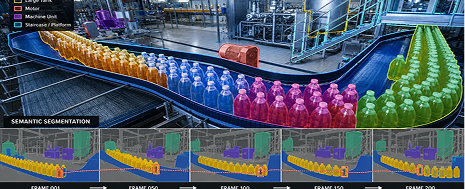
Video Annotation & Multi-Object Tracking
Persistent object ID tracking across complex multi-frame video sequences with occlusion handling, camera motion compensation, event timestamping, and keyframe interpolation.

Keypoint & Landmark Annotation
Precise skeletal joint tracking, facial landmark mapping, human pose estimation, gesture recognition, and ergonomic movement analysis for sports, healthcare, and human-machine interaction, and other specialized environments.
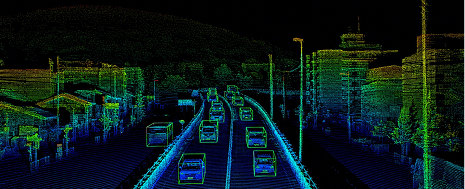
3D LiDAR & Point Cloud Annotation
High-density 3D LiDAR point cloud semantic classification, ground plane segmentation, and 3D bounding box placement for robotics, autonomous navigation, and digital twin reconstruction.
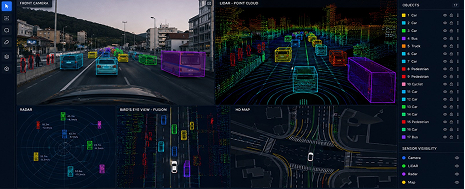
Sensor Fusion & Multimodal GIS
Synchronized multi-sensor labeling combining RGB camera frames, Thermal/Infrared (IR), LiDAR, Radar, and IMU/GPS telemetry. Includes geospatial orthomosaics and satellite SAR imagery mapped to Coordinate Reference Systems (WGS84, UTM).
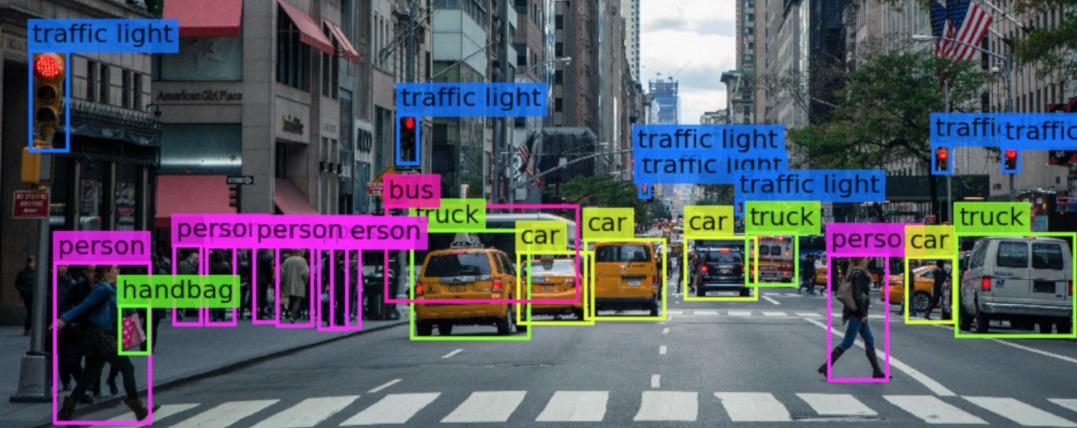
Image Classification & Tagging
Image classification services for whole-image and multi-label classification, attribute tagging, and custom taxonomies. Our specialists label scene, object, condition, and quality attributes with gold-set calibration and consensus review for consistent training data at scale.

OCR & Document Annotation
Text detection, localization, and transcription ground truth for OCR and document-understanding models — printed and handwritten — including layout regions, tables, key-value fields, and multilingual scripts, produced inside our access-controlled environment for sensitive documents.
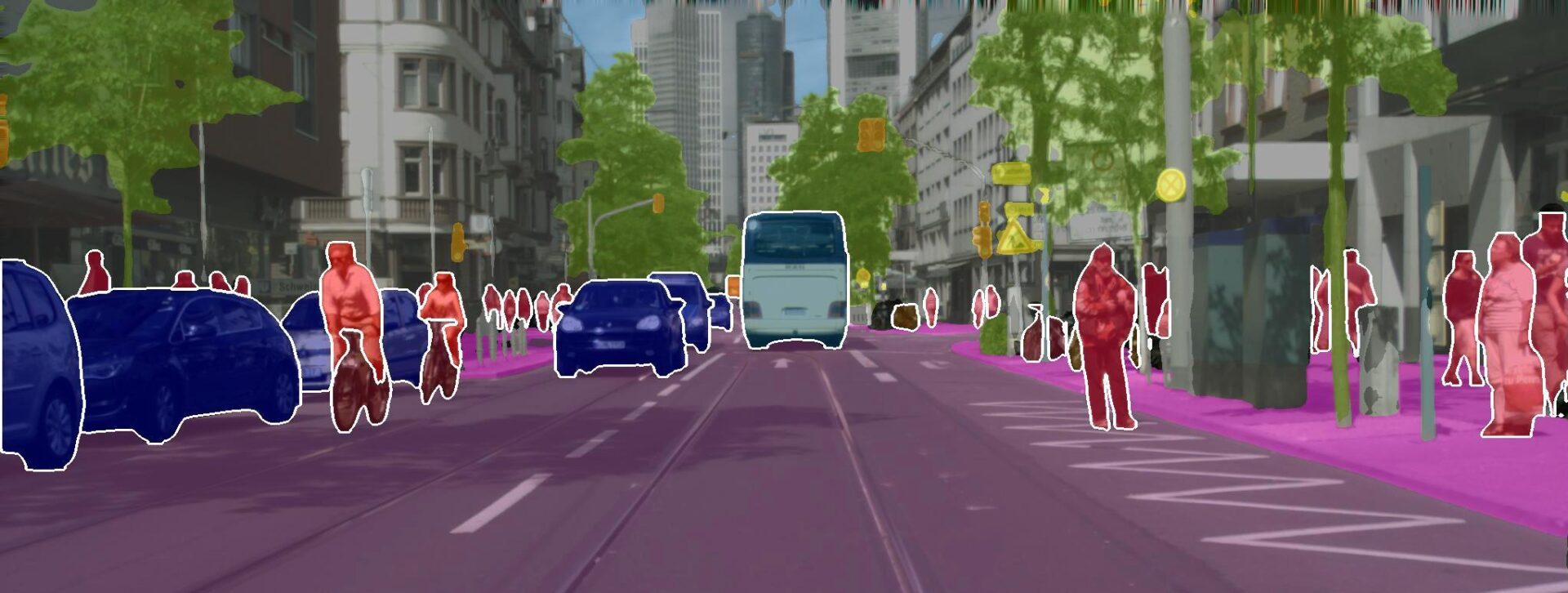
Panoptic Segmentation & Polyline Annotation
Full-scene panoptic masks that unify semantic and instance segmentation, plus polyline annotation for lane markings, road edges, curbs, rails, and cables, the pixel-complete ground truth ADAS, autonomous driving, and HD mapping models require.

Medical Imaging & DICOM Annotation
Medical image annotation services covering CT, MRI, X-ray, ultrasound, endoscopy, and pathology imagery, clinician-reviewed organ segmentation, lesion delineation, and landmark placement, handled natively in DICOM and NIfTI inside a locked-down environment built for regulated health data.
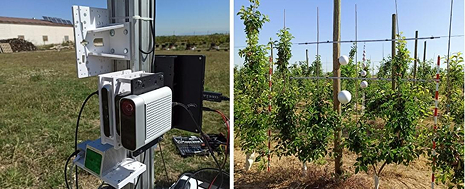
Data Collection & Creation
Custom data collection for AI training, purpose-built visual datasets captured to your spec through field and facility filming, staged scenarios, and multi-sensor rigs (RGB, thermal, LiDAR), collected, cleared, and annotated in one controlled pipeline.
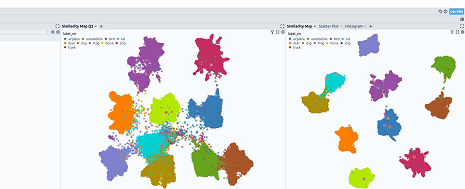
Data Curation & Edge-Case Mining
Data curation and edge-case mining that labels what matters and skips what doesn't, we mine your raw pool for rare classes, failure-adjacent samples, and distribution gaps using similarity search and model-uncertainty signals.
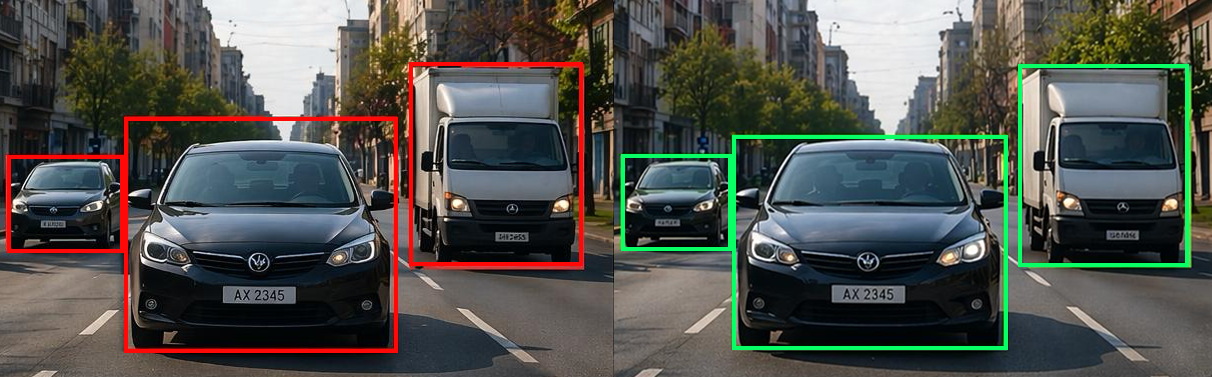
Annotation Quality Audit & Relabeling
Annotation quality audit and relabeling for inherited or noisy datasets, we score existing labels against your guidelines (error rates, inter-annotator agreement, per-class consistency), then correct, relabel, or re-taxonomize your ground truth.
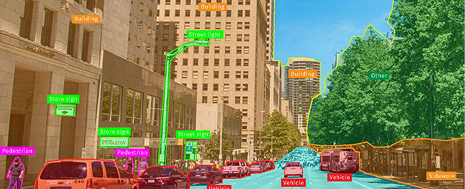
Model-Assisted Labeling & Human Verification
Model-assisted labeling with human verification, foundation-model and custom-model pre-annotations are reviewed, corrected, and approved by our specialists, cutting cost and turnaround while every accepted label still carries human verification.
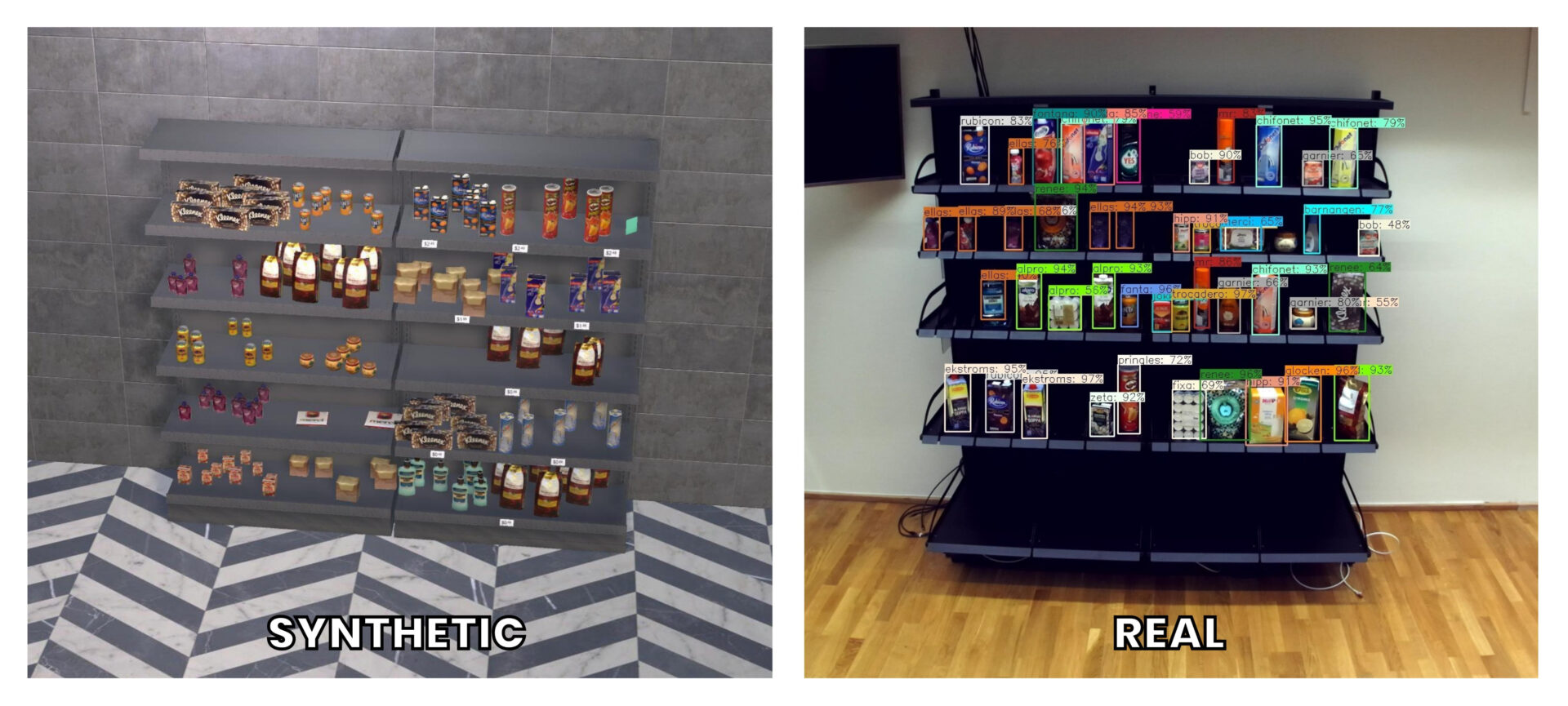
Synthetic Data Validation & QA
Synthetic data validation and QA — human review of generated and simulated imagery for realism defects, label–pixel mismatches, physically impossible scenes, and distribution drift, so synthetic data strengthens your training mix instead of quietly corrupting it.
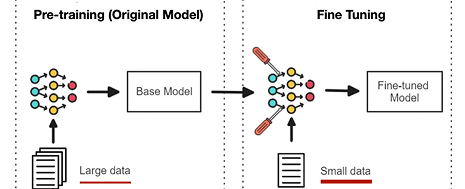
LLM Fine-Tuning & RLHF Dataset Creation
High-quality datasets for LLM alignment: supervised fine-tuning (SFT) demonstrations, RLHF preference rankings, instruction tuning pairs, and conversational AI training data, created by domain experts, not crowdsourced workers.

Multimodal & VLM Dataset Creation
Multimodal and VLM dataset creation for vision-language models — dense image and video captioning, visual question answering, region-level grounding, and multimodal preference ranking, written by trained specialists inside a secure environment.

Human-in-the-Loop Model Validation & Evaluation
Human-in-the-loop model validation and evaluation, we build golden/benchmark sets, review production outputs against acceptance rubrics, run failure-mode analysis, and feed verified corrections back as training data on every release.
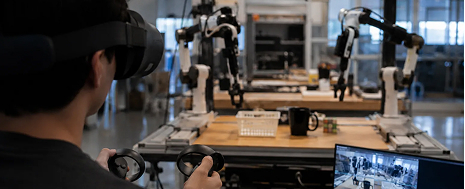
Physical AI & Robotics Data
Physical AI and robotics data, demonstration and perception data for embodied AI, including teleoperation episode annotation, egocentric video labeling, hand–object interaction, and multi-sensor sync QA, extending our LiDAR and sensor-fusion stack into robot learning.

Sports & Media Analytics Annotation
Our sports video annotation services deliver frame-accurate ground truth for sports AI — player and ball tracking with identity persistence, event and action tagging, camera-calibration landmarks, and logo/sponsor detection labels that power exposure-measurement models, delivered at broadcast scale.
Dataset-as-a-Service
Your Proprietary Dataset, Managed
Our Dataset as a Service for computer vision is a subscription, not a project: we design, collect, annotate, version, and continuously refresh your proprietary dataset, growing it with new edge cases each cycle. so your models always train on current, documented, exclusively-yours ground truth.
Most annotation engagements end at delivery; datasets then rot as products, environments, and edge cases change. Dataset-as-a-Service is a managed subscription: Obraz owns the operational loop — quarterly collection of new scenarios, curation against your model’s current failure modes, annotation, versioned releases with changelogs and coverage reports — while you own the data outright. Unlike off-the-shelf dataset stores, nothing is resold or shared; exclusivity and custody are contractual.
This is the recurring-revenue framing of what Appen calls custom data sourcing and creation, combined with versioned dataset engineering. Position it as the top-tier engagement model above per-project annotation. Guardrail: Do not add an off-the-shelf dataset catalog to this page — it contradicts the exclusivity pitch and the security narrative.
Why Companies Choose OBRAZ
for Data annotation service
Your training data may contain proprietary products, facilities, infrastructure, customer environments, medical imagery, operational footage, or defense-related visual information.
For sensitive projects, where data handling matters as much as annotation quality, Obraz’s in-house data annotation services provide greater control over the annotation environment.
SECURE IN-HOUSE ANNOTATION
At Obraz, all data annotation projects are managed using LabelOps, our proprietary in-house platform designed for secure and high-quality annotations, rather than depending on external annotation SaaS platforms for core workflows. This gives us greater control over how project data is accessed, processed, reviewed, and managed throughout the annotation lifecycle.
NO UNNECESSARY THIRD-PARTY DEPENDENCIES
Sensitive Computer Vision datasets can contain proprietary products, facilities, infrastructure, surveillance footage, medical imagery, and other confidential information. Our in-house annotation services are designed to minimize unnecessary third-party involvement, keeping annotation operations within the Obraz environment and reducing additional points of exposure.
QUALITY-CONTROLLED DATASET DEVELOPMENT
A Computer Vision model is only as reliable as the data used to train it. As a provider of data annotation services for machine learning, Our workflows incorporate project-specific labeling guidelines, defined classes, review processes, and quality checks to improve consistency across datasets and ensure the resulting training data is suitable for the intended Computer Vision application.
Domain-Specific Solutions
Different Computer Vision applications require different annotation strategies. Whether the dataset involves defense imagery, manufacturing defects, medical images, drone footage, surveillance video, logistics environments, or infrastructure, we structure annotation workflows around the objects, classes, attributes, edge cases, and visual conditions relevant to the project
ANNOTATION TO MODEL DEVELOPMENT
Annotation doesn't operate as an isolated production task at Obraz. Our data annotation services connect with the broader Computer Vision development pipeline, allowing annotation requirements, dataset issues, and model performance observations to inform subsequent iterations of the training data. This creates a continuous loop between annotation, model development, validation, and improvement.
Frequently
asked
questions
01What are data annotation services?
Data annotation services involve labeling images, videos, and other datasets so that Machine Learning and Computer Vision models can learn to identify objects, patterns, categories, regions, or events. Obraz provides secure data annotation services for Computer Vision applications, including image annotation, video annotation, object detection, segmentation, classification, tracking, and OCR-related labeling.
02What types of data annotation does Obraz provide?
Depending on project requirements, Obraz can support annotation workflows such as bounding box annotation, polygon annotation, image classification, semantic segmentation, instance segmentation, keypoint annotation, object tracking, video annotation, and OCR annotation.
03How does Obraz keep annotated data secure?
Obraz uses controlled internal annotation workflows and its proprietary LabelOps annotation platform to manage annotation operations. Access to project data can be controlled according to defined project requirements, helping reduce unnecessary exposure of sensitive visual datasets during the annotation process.
04Does Obraz use third-party data annotation platforms?
Obraz uses LabelOps, its proprietary in-house annotation platform, for its annotation workflows rather than depending on external annotation SaaS platforms for core annotation operations. This gives Obraz greater control over the annotation environment and how project data is handled.
05Does Obraz outsource data annotation to third-party vendors?
Obraz’s annotation model is built around its in-house annotation workflow and internal team, minimizing unnecessary third-party involvement. For sensitive projects, the applicable personnel, infrastructure, access controls, and data-handling requirements should be defined during project scoping.
06What is LabelOps?
LabelOps is Obraz’s proprietary in-house data annotation platform used to support Computer Vision data annotation services. It provides the working environment for annotation operations and helps connect data labeling with the broader Computer Vision development lifecycle.
07How does data annotation quality affect Computer Vision model performance?
Training data quality directly affects the ability of a Computer Vision model to learn the intended visual patterns. Inconsistent labels, missing objects, ambiguous classes, and annotation errors can introduce noise into a dataset. Obraz uses project-specific annotation guidelines and quality-control workflows to improve consistency and prepare datasets for model development.
08Can Obraz annotate sensitive defense, industrial, healthcare, or surveillance data?
Obraz can support sensitive Computer Vision datasets subject to project requirements, applicable regulations, contractual obligations, and security controls. Potential applications include defense imagery, industrial inspection data, surveillance video, medical imagery, drone footage, infrastructure imagery, and logistics datasets.
09Can Obraz handle large-scale Computer Vision datasets?
Annotation capacity and workflow design can be scaled according to project volume, annotation complexity, required turnaround time, quality requirements, and available resources. Large datasets can be organized into defined annotation, review, quality-control, and dataset-delivery stages.
10Can annotation be integrated directly into Computer Vision model development?
Yes. Obraz connects data annotation, dataset preparation, and Computer Vision model development within its broader engineering workflow. Annotation results can be used to create training datasets, while model evaluation can identify additional data or labeling requirements for subsequent iterations.
11What industries use secure data annotation services?
Secure data annotation can support Computer Vision projects across defense, aerospace, manufacturing, healthcare, logistics, retail, security and surveillance, maritime, automotive, agriculture, energy, construction, mining, and public infrastructure.
12How can professional data annotation improve AI project ROI?
High-quality annotation can reduce the time spent correcting training-data problems, improve dataset consistency, reduce rework during model development, and help teams reach usable model performance more efficiently. The business impact depends on the model, dataset, quality requirements, and operational use case.
Ready for Reliable Computer Vision
Data Annotation?
Have a Computer Vision project that needs accurate, high-quality training data? Obraz provides Computer Vision Data Annotation Services and dataset engineering support to help organizations prepare reliable visual datasets for effective model development across demanding operational environments.